
Trial Production of As-Cast Ferritic Ductile Iron Cylinder Block Castings
Publication Date : 2022-12-05 13:41:13
Trial Production of As-cast Ferritic Ductile Iron Cylinder Block Castings
Fan Zhiyong
(Zhejiang Hangji Casting Co., Ltd., Zhejiang Shaoxing 311822)
Source: Modern Cast Iron
Author introduction: Fan Zhiyong (1965.11–), male, native of Hangzhou, Zhejiang, graduated from Southeast University majoring in casting, mainly engaged in research on casting process technology and technical quality management.
CLC number:TG255 Document code: B Article ID: 1003-8345(2021)06-0005-04
DOI:10.3969/j.issn.1003-8345.2021.06.002
The cylinder block is one of the important parts of a diesel engine, and its casting quality will directly affect the service performance of the engine. In the current casting production field, diesel engine cylinder blocks mostly use high-grade Gray Iron or Alloy Cast Iron, but during use, cylinder blocks are prone to thermal fatigue cracks, which is closely related to the characteristic that the elongation of Gray Iron is almost zero. In addition, the composition of high-grade Gray Iron is far from the eutectic point, the cooling crystallization range is relatively wide, and the casting performance is poor, making it prone to shrinkage cavity and shrinkage porosity defects, causing leakage and failure.
Compared with Gray Iron, Ductile Iron castings have good strength and relatively high elongation under severe conditions such as high temperature, high pressure and poor lubrication; ferritic ductile iron has better fatigue resistance than Gray Iron and Alloy Cast Iron[1-4], and can meet various service requirements of diesel engine cylinder blocks with complex stress, relatively large load, and both strength and toughness of the material; its production cost is lower than that of Alloy Cast Iron, so it has become an ideal casting material for manufacturing diesel engine cylinder blocks.
1. Casting Structure and Technical Requirements
(1) Casting Structure
The C500 diesel engine cylinder block is a product newly designed by the customer to meet military needs. The material grade is QT400-18A, the overall dimensions are 2650mm×1160mm×870mm, the casting blank mass is 3.2t, the 20 cylinder bores are arranged in a V shape, and the minimum and maximum wall thicknesses are 8mm and 62mm respectively. The physical image of the casting is shown in Figure 1.
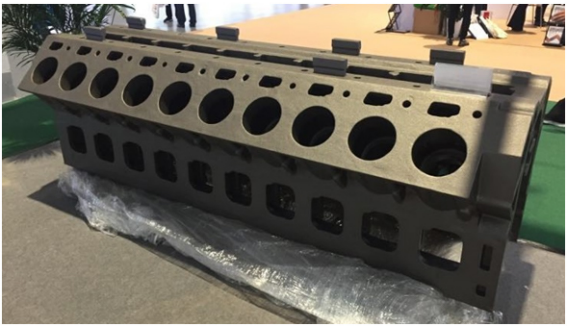
Figure1 Physical image of diesel engine cylinder block casting
(2) Technical Requirements
1.Chemical composition:w(S)≤0.02%,w(P)≤0.05%。
2.Impact toughness: average of three values14J/cm2, individual values not lower than 11J/cm2.
3.Metallographic structure: nodularity gradeGrade 1–2, graphite size Grade 5–6, ferrite volume fraction ≥90%.
4.Pressure test: hydrostatic test0.5MPa for 10min, oil pressure test 1.2MPa for 15min, no leakage.
5.Internal defect control: at cylinder bores, cylinder surface bolt holes, bearing seat bolt holes, bearing shell tie bolt holes, etc., the first piece needs to be sectioned, and mass production requires ultrasonic testing; there must be no shrinkage defects internally.
2. Melting Process
The melting process adopts the duplex method of cupola plus holding furnace; the nodularization treatment adopts a dam-type treatment ladle and the ordinary sandwich method, usingQ10 pig iron and steel scrap; the charge ratio is 78% Q10 pig iron + 22% steel scrap. The chemical composition is w(C) 3.51%, w(Si) 2.7%, w(Mn) 0.2%, w(P) 0.03%, w(S) 0.009%, w(Mg) 0.052%, w(RE) 0.041%. The tapping temperature of the holding furnace is 1480–1490℃, and the pouring temperature is controlled in the range of 1360–1380℃.
A ferritic nodularizer is pre-embedded at the bottom of the Ductile Iron ladle; the addition amount is about the total molten iron amountof 4.3t, i.e. 1.7%. Use silicon-barium inoculant (particle size 5–15mm) at 0.1% of the total molten iron amount to cover the nodularizer. Tap until about 2/3 of the total molten iron amount; the nodularization reaction time is controlled at about 60s. When the nodularization boiling reaction is about to end, add silicon-barium inoculant (particle size 5–15mm) at 0.4% of the total molten iron amount at the position where molten iron is poured into the ladle, and at the same time fill the remaining 1/3 of the molten iron amount in the ladle. After skimming off the slag on the molten iron surface, add silicon-barium inoculant (particle size 5–15mm) at 0.4% to the molten iron surface. During pouring, add 0.1% stream inoculant (particle size 0.2–0.7mm) along with the molten iron stream.
3. Casting Process
Due toThe internal structure of the C500 cylinder block is complex. The wall thickness difference between thin-walled ribs and thick-walled areas such as cylinder bores and bearing journals is large, causing shrinkage cavity and shrinkage porosity defects easily at thick-walled hot spots, affecting compactness, and then causing leakage of the cylinder block during pressure testing. Thin-walled areas are also prone to casting defects such as cold shuts and misruns. In addition, at locations with very different wall thicknesses, due to varying cooling and solidification times, the casting is prone to shrinkage deformation and dimensional deviation. Therefore, when designing the casting process, reasonably designing the gating system and formulating effective feeding measures and solidification methods are key to avoiding the above casting defects in the casting. The casting process plan is shown in Figure 2.
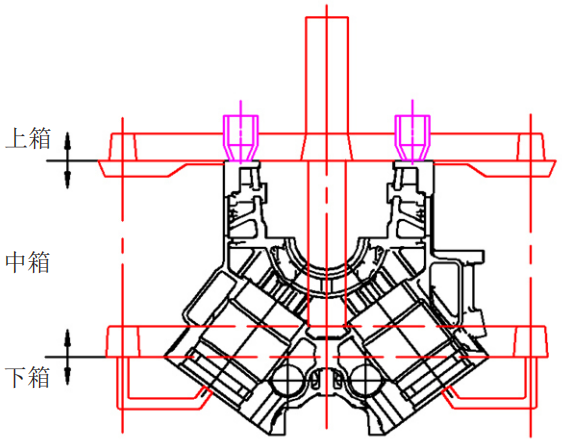
Figure 2 Schematic diagram of casting process
(1)Molding process: adopt three-flask molding with upper, middle and lower flasks. Its advantages are that it is convenient to arrange upper and lower layers of ingates, the dimensions between cores are easy to measure during mold assembly, and it is beneficial to remove debris in the mold.
(2)Gating system design: adopt a pressurized gating system, and the gating ratio isΣFSprue:ΣFRunner:ΣFIngate=1.18:1.04:1. A stopper pouring cup is used. The lower layer of runners first receives molten iron. When the molten iron is poured to 3/4 of the total amount, the stopper is pulled so that the upper layer of runners simultaneously receives molten iron. The molten iron in the sprue enters the mold cavity from the middle of the flywheel end. The runners are divided into two layers, both distributed in a U shape: the cross-sectional size of the lower runner is 80/70mm×75mm, and the cross-sectional size of the upper runner is 65/55mm×65mm. The ingates are arranged in two layers. The iron inflow strives to conform to the characteristics of resin sand of “fast and stable”. The main method is smooth bottom pouring through the lower ingates, composed of 22 φ25mm ceramic tubes, entering along the cylinder wall between two cylinder bores, reducing the resistance to molten iron rising, making the iron entry smooth and avoiding turbulence. The upper ingates are evenly arranged on both sides of the upper flask parting surface, composed of 16 flat gates with a size of 55/50mm×9mm. Their main function is to increase the temperature of the upper molten iron in the later stage of pouring, which is beneficial to molten iron feeding.
(3)Riser placement: The volume shrinkage generated during solidification of Ductile Iron castings with uneven thickness cannot be compensated only by graphitization expansion. Once graphitization expansion is insufficient, shrinkage defects are likely to occur at hot spots. The shrinkage defects of this cylinder block are solved by riser feeding process, and the process plan focuses on how to improve the feeding efficiency of the risers.
Related information shows[5-7], the portion of ordinary risers actually used for feeding castings accounts for only6%–10% of the riser volume; insulated risers can increase riser feeding efficiency to 20%–25%, while exothermic insulated risers can increase riser feeding efficiency to 45%. If ordinary top risers are used to feed such Ductile Iron castings, the top of the riser may solidify and form a shell first, causing an unreasonable temperature distribution of cold top and hot bottom, causing the physical hot spot in the riser to drop to the riser root, increasing the actual hot spot of the casting. Since the riser solidifies before the casting, reverse shrinkage may occur at the riser root. Therefore, a feeding scheme with top-mounted exothermic insulated risers is adopted. The specific process measures are: place 8 large-diameter exothermic insulated risers of φ180mm at equal distances on the upper flask plane. Relying on the heat generated by continuous combustion of the exothermic material, the temperature of the molten iron in the risers is increased, ensuring that the upper layer of molten iron always maintains a relatively high temperature before the casting solidifies, forming a temperature gradient decreasing from top to bottom, so that the molten iron in the entire mold can maintain effective feeding pressure and maximize the effect of liquid feeding of the casting.
(4)Chill measures: For slowly cooling thick-walled areas (such as cylinder bores, cylinder surface bolt holes, bearing seat bolt holes, bearing shell tie bolt holes, oil passages and other thick-walled locations), use conforming chills for chilling, accelerate the cooling rate, improve the compactness of the structure in these important areas, and prevent internal shrinkage-type defects.
IV. Test Results
(1)Metallographic Structure and Mechanical Properties Test Results
For the trial-producedC500 cylinder head casting, dissection sampling was carried out, and 1 tensile specimen, 3 V-notched impact specimens, 3 unnotched specimens, and 1 hardness specimen were machined. After testing, the metallographic structure of the casting is shown in Figure 3. It can be seen that the nodularity of the specimen is 90%, the graphite size is grade 6, and the matrix structure is ferrite, meeting the technical requirements. The mechanical properties are tensile strength 442MPa, yield strength 305MPa, elongation 22%, impact absorbed energy 15J, 15J, 16J, and hardness 160HBW; all mechanical properties meet the technical requirements.

(a) Graphite morphology

(b) Matrix structure
Figure3 Metallographic structure of the casting body
(2)Defect Detection Results
1.Ultrasonic testing: defects at all important positions conform tothe Grade 2 requirements in the standard JB/T5439-1991 'Ultrasonic Flaw Detection of Ductile Iron Parts for Compressors'.
2.Pressure test: The cylinder block was tested by water pressure and oil pressure as required, and no leakage was found.
3.First article physical dissection: no shrinkage cavity defects were found on the sectioned surfaces at the cylinder bores, cylinder face bolt holes, bearing seat bolt holes, bearing shell tie-down screw holes, etc.
V. Concluding Remarks
During the melting process of ferritic ductile iron castings, by strengthening inoculation measures, the objectives of refining graphite, increasing the number of graphite nodules, and improving nodularity were achieved, ensuring ideal metallographic structure and mechanical properties.
By rationally designing the gating system, evenly placing exothermic insulating risers, and strictly controlling the temperature gradient of the mold, the feeding effect was effectively improved, and shrinkage casting defects in the castings were avoided.
References
[1] Li Chaodong, Li Dong, Ma Yuan, et al. Quality Improvement of Ductile Iron Castings for Small Motor Bases [J]. Modern Cast Iron, 2021(3): 1-4.
[2] Shen Chuang, Diao Xiaogang. Application of Ductile Iron in Heavy-Section Support Components [J]. Modern Cast Iron, 2021(1): 1-3.
[3] Gong Jimin, Zeng Yicheng. Production of As-Cast High-Strength High-Ductility Pearlitic Ductile Iron (1) [J]. Modern Cast Iron, 2021(2): 9-12.
[4] Gong Jimin, Zeng Yicheng. Production of As-Cast High-Strength High-Ductility Pearlitic Ductile Iron (2) [J]. Modern Cast Iron, 2021(3): 9-13.
[5] He Yuan, Ma Mintuan. Development of a New Exothermic Insulating Riser [J]. Mechanical Worker (Hot Working), 2000(12): 9-10.
[6] Xiao Zexin. Research and Application of Surface-Dry Insulating Risers [J]. Foundry, 1998(6): 3-5.
[7] Wei Bing, Yuan Sen, Zhang Weihua. Balanced Solidification Technology for Castings and Its Application [M]. Beijing: China Machine Press, 1998.