
Machining Allowance by Casting Process: Stop Paying for Extra Metal
Publication Date : 2026-10-13 16:25:13
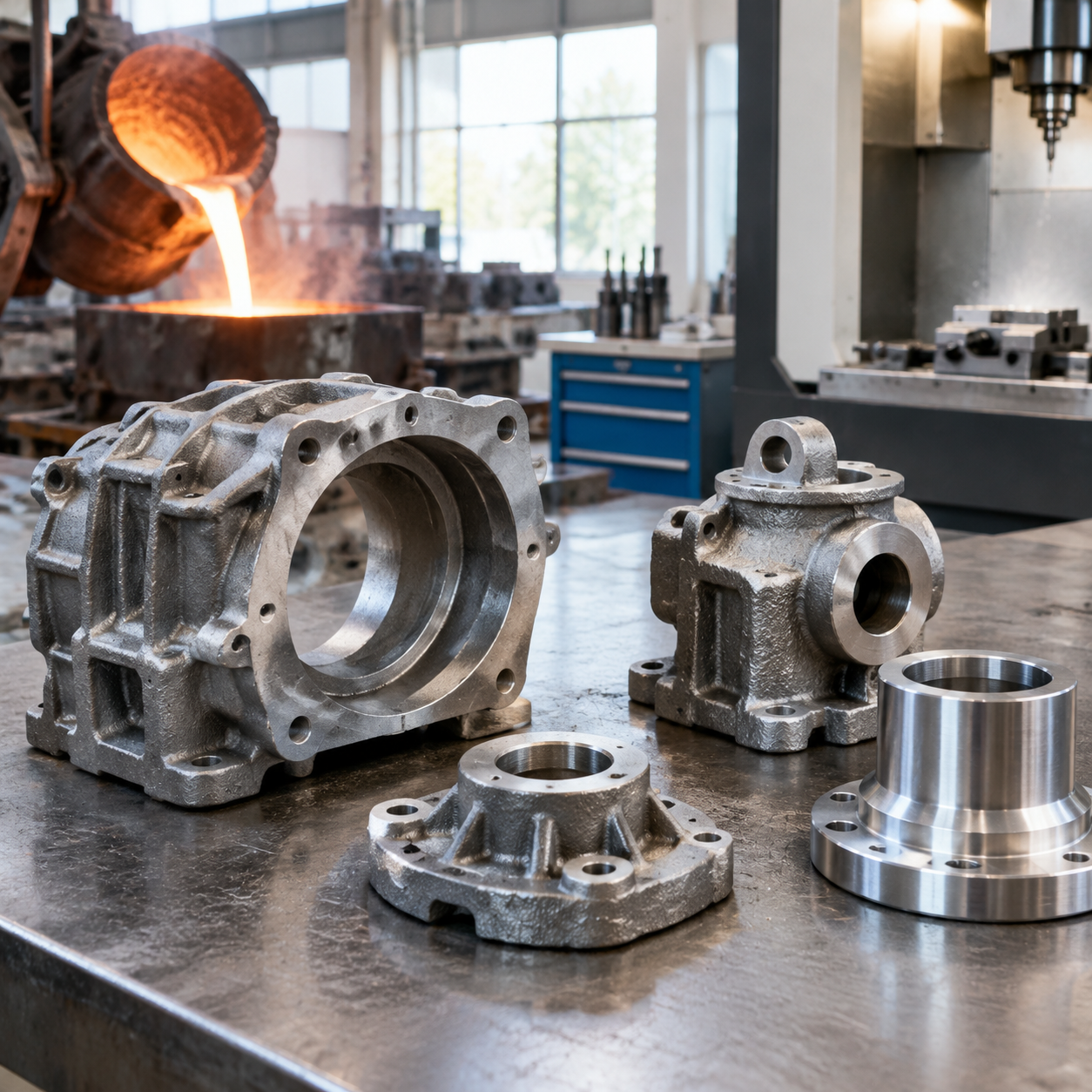
Overspecified machining allowance adds material cost, weight, and machining time. This guide breaks down typical allowance ranges for sand, investment, and die casting, and shows how to avoid overpaying.
Why Machining Allowance Matters to Your Bottom Line
Machining allowance is the extra metal left on a casting surface that will be removed during machining to achieve the final dimensions and finish. It’s a necessary evil—but too much of it is pure waste. Every extra millimeter of allowance increases the casting’s weight, which raises material cost, shipping cost, and the time your machinist spends cutting air. For a typical sand casting, an extra 2 mm of allowance on a 10 kg part can add 0.5 kg of metal and 30 seconds of machining per surface. Across a production run, that’s thousands of dollars in unnecessary cost.
The right allowance depends on the casting process, the alloy, the part size, and the surface finish required. Overspecifying allowance is common because designers default to conservative numbers from old handbooks. But modern casting processes can hold tighter tolerances, and machining centers are more rigid, so you can safely reduce allowance. The key is to understand what each process can actually deliver.
Typical Allowance Ranges by Casting Process
Sand casting, the most common process for large parts, typically requires 3–5 mm allowance on small parts (under 10 kg) and 6–10 mm on larger parts (over 100 kg). Investment casting, known for precision, needs only 0.5–1.5 mm for small parts and 2–3 mm for larger ones. Die casting, with its hard steel dies, can hold 0.3–0.8 mm for small parts and 1–1.5 mm for medium parts. Gravity die casting falls between sand and investment, with 1.5–3 mm typical.
These ranges assume a machined surface with a finish of Ra 3.2–6.3 µm. If you need a finer finish, add 0.2–0.5 mm. Also consider draft angles: they add to the as-cast surface, so your machining allowance must account for them. The table below summarizes common ranges by process and part size.
How Overspecified Allowance Inflates Machining Cost
Machining cost is driven by material removal rate and tool wear. If you double the allowance, you don’t just double the cutting time—you often triple it because you need multiple passes. For example, reducing allowance from 5 mm to 3 mm on a cast iron part can cut machining time by 40% and extend tool life by 25%. Plus, less material means lower casting weight, which reduces melting energy and shipping cost.
Another hidden cost: extra allowance can cause distortion during machining. When you remove a thick layer of metal, residual stresses in the casting can warp the part, leading to scrap or rework. Thinner allowances mean less stress relief and better dimensional stability. So overspecifying allowance is not just wasteful—it’s risky.
Checklist: Optimizing Allowance for Your Next Casting
Before you finalize your casting drawing, run through this checklist to ensure you’re not paying for extra metal.
Remember: your foundry and machine shop are partners. Share your machining plan with the foundry so they can adjust the pattern or die to leave just enough material. A collaborative approach typically saves 10–20% on total part cost.
- Specify allowance per surface, not a blanket value—critical surfaces may need more, non-critical less.
- Confirm the casting process can hold your tolerance; don’t ask sand casting to hold ±0.5 mm.
- Account for draft angles: they add to as-cast dimensions, so allowance must be measured from the drafted surface.
- Consider distortion: thin walls may need extra allowance to clean up after warping.
- Ask your machinist for the minimum cleanup stock—often 0.5 mm is enough for a clean face.
- Review alloy machinability: aluminum cuts faster than steel, so allowance cost is lower.
- Use simulation to predict shrinkage and distortion, then set allowance accordingly.
- Standardize allowance across similar parts to simplify pattern making and machining programming.
Frequently Asked Questions
Can I reduce machining allowance on an existing casting without changing the pattern?
Yes, if the pattern has enough stock. You can machine away less material, but you must ensure the as-cast surface still cleans up. Check the minimum wall thickness and consult your foundry—they may be able to adjust the pattern for future orders.
What allowance should I specify for a 50 kg sand casting with critical bores?
For a 50 kg sand casting, use 6–8 mm on general surfaces and 8–10 mm on critical bores to ensure cleanup. If the bores are large, you might reduce to 6 mm. Always verify with your machinist.
Does allowance affect casting price directly?
Yes. More allowance means more metal poured, which increases material cost. It also adds weight, raising shipping and handling costs. However, the biggest impact is on machining time—excess allowance can significantly increase your machining bill.
Looking for a reliable casting supplier? Request a quote from Intercontinental Casting — our engineering team replies within one business day.