
Weld Repair of Large Castings: When It's Safe (and When Not)
Publication Date : 2026-10-15 03:10:20
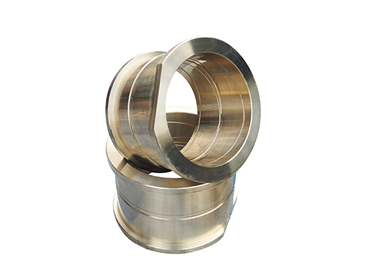
Weld repair can salvage expensive large castings, but only if the defect type, repair procedure, and re-qualification testing are properly controlled. This guide explains defect classes, acceptable repair procedures, required testing, and what to demand in the repair report.
Defect Classes: What Can Be Repaired
Not all casting defects are equal. Porosity, shrinkage, and cracks are common, but their repairability depends on size, location, and service requirements. Generally, isolated porosity under 5 mm in diameter and shrinkage cavities under 20 mm can be repaired by welding if they are not in critical stress areas. Cracks, however, are a red flag—especially if they exceed 10% of the wall thickness or are located in high-stress zones. Cracks often indicate deeper issues like hot tearing or improper cooling, and welding them may just mask a larger problem.
Defects in pressure-containing areas or fatigue-critical regions (e.g., crane hooks, turbine housings) should be scrutinized more strictly. For example, ASME BPVC Section VIII allows weld repairs on castings if the repair area is less than 20% of the surface area and the depth is less than 25% of the wall thickness, but each case must be evaluated by an engineer. When in doubt, reject the casting rather than risk a catastrophic failure.
Repair Procedure: Steps and Controls
A qualified weld repair follows a strict sequence: excavation, preheat, welding, post-weld heat treatment (PWHT), and inspection. Excavation must remove the defect entirely—confirmed by dye penetrant or magnetic particle testing—and blend smoothly into the surrounding metal. Preheat temperature depends on the material: for carbon steel, 100–150°C; for low-alloy steel, 150–250°C; for stainless steel, often not required but interpass temperature must be controlled. Welding should use low-hydrogen electrodes (e.g., E7018) and be performed by a welder qualified to ASME Section IX or equivalent.
PWHT is critical for stress relief, especially for thick sections. For carbon steel, hold at 600–650°C for one hour per 25 mm of thickness. After PWHT, the repair area must be re-inspected with the same NDT methods used originally. If the casting is for critical service, additional volumetric NDT (UT or RT) may be required. Never allow a repair without documented preheat and PWHT—these are non-negotiable for large castings.
- Excavate defect completely; confirm with NDT.
- Preheat to material-specific temperature (100–250°C).
- Weld with qualified procedure and welder.
- Perform PWHT (600–650°C for carbon steel).
- Re-inspect with PT/MT, plus UT/RT if required.
Re-Qualification Testing: What to Demand
After repair, the casting must be re-qualified to the original specification. This means repeating the tests that were required for the original casting, but focusing on the repair area. At minimum, perform visual inspection, dye penetrant (PT) or magnetic particle (MT) testing on the repaired zone, and hardness testing to verify PWHT effectiveness. For critical applications, ultrasonic testing (UT) or radiography (RT) is mandatory to detect internal defects.
Mechanical testing may also be required. For example, if the casting is for a pressure vessel, you may need to cut a test coupon from a prolongation or use a mock-up to verify tensile strength and impact toughness. The cost of re-qualification can be 10–20% of the casting price, but it's far cheaper than a field failure. Always insist on a repair report that includes: defect description, repair procedure, welder qualifications, NDT results, PWHT chart, and final inspection sign-off.
What to Demand in the Repair Report
A repair report is your only proof that the repair was done correctly. It should be a controlled document, signed by the foundry's quality manager and, if applicable, a third-party inspector. The report must include: the original defect's location, size, and type; the repair procedure specification (WPS) and procedure qualification record (PQR); the welder's qualification; preheat and interpass temperatures; PWHT chart with time and temperature; and all NDT results with acceptance criteria. Without these, you have no traceability.
Also, demand photos of the excavation and the finished weld. For large castings, a repair map showing the location of all repairs is helpful for future reference. If the foundry resists providing this documentation, consider it a warning sign. A reputable foundry will have no issue sharing a complete repair report—it's a standard part of quality assurance.
Frequently Asked Questions
Can a cracked casting be repaired by welding?
It depends on the crack's size, location, and cause. Small cracks (under 10% of wall thickness) in non-critical areas can be repaired if the crack is completely excavated and the repair is properly qualified. However, cracks in high-stress zones or those that exceed 10% of wall thickness are often grounds for rejection because they may indicate a systemic problem.
What is the maximum size of a weld repair allowed on a large casting?
There is no universal maximum, but common industry practice limits repairs to less than 20% of the surface area and less than 25% of the wall thickness. For critical applications, even smaller repairs may require engineering approval. Always refer to the original design code (e.g., ASME, ASTM) for specific limits.
How do I verify that a weld repair was done correctly?
Demand a complete repair report that includes the WPS/PQR, welder qualification, preheat and PWHT records, and NDT results. Also, require re-inspection of the repaired area with the same NDT methods used originally. If possible, have a third-party inspector witness the repair and review the documentation.
Looking for a reliable casting supplier? Request a quote from Intercontinental Casting — our engineering team replies within one business day.