
Counterweight Castings: Design Choices That Cut Cost
Publication Date : 2026-10-16 03:10:22
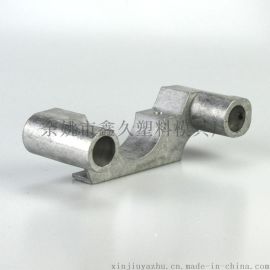
Counterweight castings are cost-sensitive components where small design decisions drive big savings. This article explains how material fill options, wall thickness, and handling features affect unit cost, with practical ranges and a cost-share pie chart to guide sourcing decisions.
Material Fill Options: Balance Cost and Performance
The choice of material fill—whether the counterweight is solid cast iron, concrete-filled, or a composite—directly impacts raw material cost, weight, and manufacturability. For a typical 50–500 kg counterweight, solid gray iron (e.g., HT200) costs roughly $0.80–$1.20 per kg in China, while a concrete-filled steel shell can reduce material cost by 30–50% but adds fabrication steps. Sand-cast iron with internal cores to create voids can cut weight by 15–25% without sacrificing external dimensions, but core-making adds $2–$5 per piece. For low-volume runs (under 500 pieces), solid iron is often cheaper because it avoids pattern and core costs. For high-volume runs (5,000+ pieces), engineered voids or composite fills become economical. Always specify the minimum weight required for stability; over-specifying by 10% can increase material cost by 8–12%.
Wall Thickness: The Hidden Cost Driver
Wall thickness affects both casting yield and solidification time. For gray iron, a minimum wall of 6–8 mm is practical for small counterweights, but thicker sections (20–50 mm) are common for heavier weights. Increasing wall thickness from 20 mm to 30 mm on a 200 kg part can raise material cost by 15–20% and may introduce shrinkage porosity unless feeders are added. Conversely, reducing wall thickness below 10 mm requires higher pouring temperatures and can lead to misruns. A good rule: keep wall thickness as uniform as possible; abrupt changes create hot spots and require expensive risers. If weight must be added, do it with ribs or bosses rather than thickening the entire wall. For a 100 kg counterweight, a 5 mm reduction in average wall thickness can save 8–12 kg of iron, translating to $6–$14 per piece at $0.80–$1.20/kg.
Handling Features: Small Additions, Big Savings
Handling features like lifting lugs, forklift pockets, and threaded holes are often added after casting, but integrating them into the pattern can reduce machining and assembly cost. Cast-in lifting lugs typically add $1–$3 per lug but eliminate $5–$10 of welding or drilling. Forklift pockets formed by cores add $2–$4 per pocket but save $8–$15 in secondary operations. For counterweights over 50 kg, always include at least two lifting points; this reduces manual handling time by 30–50% and lowers injury risk. However, avoid over-designing: a 10 kg counterweight rarely needs more than one lifting eye. Also consider stacking features—interlocking ribs or recesses—which can save 10–15% on shipping and storage costs by improving cube utilization.
- Cast-in lifting lugs: add $1–$3 each, save $5–$10 in welding/drilling.
- Forklift pockets: add $2–$4 each, save $8–$15 in secondary operations.
- Stacking ribs/recesses: reduce shipping cost by 10–15%.
- Threaded holes cast-in: add $0.50–$1.50 each, save $3–$6 in tapping.
- Avoid unnecessary features: each extra core adds $2–$5 and increases scrap risk.
Putting It Together: A Cost-Cutting Checklist
Before finalizing a counterweight design, run through this checklist: (1) Confirm the minimum required weight—over-specifying by 10% can add 8–12% to material cost. (2) Choose the lowest-cost fill that meets weight and stability: solid iron for low volume, cored or composite for high volume. (3) Keep wall thickness uniform and as thin as practical (6–10 mm for small parts, 20–30 mm for large). (4) Integrate handling features only where they reduce total labor. (5) Simulate solidification to avoid hidden porosity that leads to scrap rates of 5–15%. (6) Request a cost breakdown from your foundry—raw material, molding, finishing—to identify the biggest levers. A 10% design optimization can easily yield 15–20% total cost reduction.
Frequently Asked Questions
What is the most cost-effective material for a 200 kg counterweight?
For volumes under 1,000 pieces, solid gray iron (HT200) at $0.80–$1.20/kg is usually cheapest. For volumes above 5,000 pieces, a concrete-filled steel shell or cored iron casting can reduce material cost by 30–50%, but tooling and core costs must be amortized.
How thin can I make the walls to save weight?
For gray iron, minimum practical wall thickness is 6–8 mm for small parts and 10–12 mm for parts over 100 kg. Going thinner risks misruns and requires higher pouring temperatures, which can increase defect rates. Uniform thickness is more important than absolute minimum.
Are cast-in lifting lugs worth the extra cost?
Yes, for counterweights over 50 kg. Cast-in lugs add $1–$3 each but save $5–$10 in welding or drilling, and they reduce handling time by 30–50%. For small parts under 20 kg, simple cast-in eyes or holes are sufficient.
Looking for a reliable casting supplier? Request a quote from Intercontinental Casting — our engineering team replies within one business day.