
PPAP for Castings: What Level 3 Really Requires
Publication Date : 2026-10-24 03:10:41
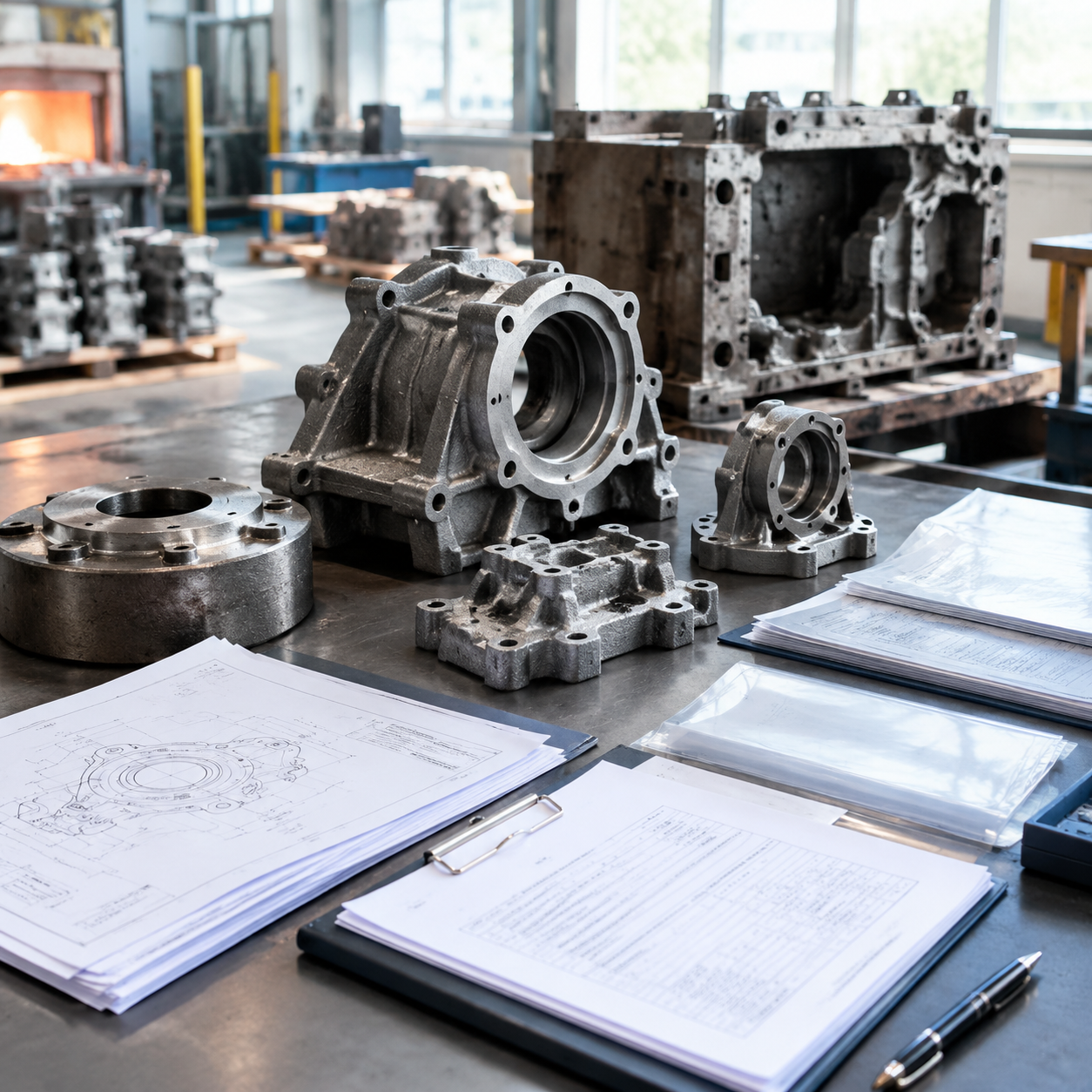
PPAP Level 3 is the default submission level for most casting buyers, but the package is more than a stamped warrant. This guide lists the documents a Level 3 casting PPAP should contain, the gaps that recur most often in Chinese foundry submissions, and how to check a package before you sign the PSW.
What Level 3 Actually Means for a Casting
PPAP Level 3 means the supplier submits the full package to the customer for review, with samples and supporting data, before the part is approved for production. In practice, buyers apply it to castings that are new, revised, or moved to a new tool or foundry. The submission is not a one-page certificate; it is a bundle of evidence that the process can repeat the drawing requirements at rate.
For castings, the scope is wider than for machined parts because the special characteristics are set by the process itself: wall thickness, section transitions, riser and gate locations, heat-treat response, and porosity limits. A Level 3 package therefore has to show both the dimensional result and the process controls that produced it. If a foundry sends only a dimensional report and a PSW, it has not submitted Level 3.
The Level 3 Document Package for Castings
A complete Level 3 casting submission typically runs 18 to 25 documents depending on the part. The core set below is what a buyer should expect to receive as one indexed package, not as scattered emails.
Ask for a document index with revision dates on the first page. If the index is missing, the package is usually incomplete.
- Design records: current drawing with revision level and all referenced specifications
- Engineering change documents, if any, tied to the drawing revision
- Customer engineering approval, where the drawing requires it
- DFMEA, if the buyer owns the design; PFMEA covering casting, heat treat, and machining
- Process flow diagram from raw material receipt to shipping
- Control plan matching the flow diagram, with special characteristics flagged
- MSA studies for gauges used on special characteristics, typically %GRR under 10%
- Dimensional results on 3 to 5 parts from each cavity or pattern, with pass/fail against drawing tolerances
- Material and performance test results: chemistry, mechanical properties, and any NDT required by the drawing
- Initial process studies for special characteristics, usually Ppk of 1.67 or higher unless the buyer specifies otherwise
- Lab qualification records and scope for in-house or external testing
- Appearance approval report, if the drawing has appearance requirements
- Sample production parts, usually retained at the foundry and available on request
- Master sample signed and dated by both parties
- Checking aids and fixture list
- Customer-specific requirements, if the buyer's industry adds them
- PSW, Part Submission Warrant, signed with the submission level stated
Where Chinese Foundry PPAP Packages Usually Fall Short
The most common gap is not a missing document but a document that does not match the part actually shipped. Dimensional reports are sometimes taken from a first-article casting before tool correction, while the PSW is signed against the corrected tool. The numbers look acceptable, but they do not describe the process in production. Buyers should check that the report dates, part serial numbers, and tool revision all line up.
The second recurring gap is the process chain. Casting, heat treat, and machining are often run by different suppliers, and the PFMEA and control plan cover only the foundry's own operations. Heat-treat parameters such as soak time and quench delay, and machining fixtures and torque values, may have no documented control at all. A Level 3 package that stops at the casting gate leaves the buyer without evidence for the operations that most affect final dimensions and strength.
The third gap is measurement discipline. Gauge studies are frequently absent for castings measured with CMMs or functional gauges, and initial process studies are sometimes calculated from a single shift of data. A Ppk figure based on 25 parts from one pour is not a process study. Buyers should ask for the sample size, the number of subgroups, and the time span covered.
How to Review a Package Before You Sign the PSW
Review in the order the process runs, not the order the documents are filed. Start with the drawing revision and the process flow, then confirm the PFMEA and control plan address every step in that flow, then check that the dimensional and material results were taken from parts made under those controls. A package that passes this walk-through is usually sound; one that fails it usually fails in more than one place.
Set a short written checklist for the foundry before the first submission: drawing revision, cavity count, sample size, gauge list, Ppk target, and which operations are subcontracted. Foundries that receive this list upfront submit cleaner packages, and the review cycle drops from weeks to days. Keep the signed master sample and the approved package under revision control; if the tool or heat-treat source changes, expect a new Level 3 submission rather than an email update.
Frequently Asked Questions
Frequently Asked Questions
Is PPAP Level 3 always required for castings?
No. Level 3 is the most common default for new or changed castings, but buyers can specify a lower level for mature parts with stable history. Even then, the foundry should keep the full package on file and available on request.
How many parts should the dimensional report cover?
A practical baseline is 3 to 5 parts per cavity or pattern, taken from a production run rather than a trial pour. For high-volume parts with multiple cavities, confirm the sampling plan in writing before the run.
What Ppk should a casting process meet?
Many buyers require Ppk of 1.67 or higher for special characteristics, but the target should be stated on the purchase order or in the customer-specific requirements. Ask for the sample size and time span behind any Ppk figure.
Looking for a reliable casting supplier? Request a quote from Intercontinental Casting — our engineering team replies within one business day.