
Valve Shell and Seat Testing: API 598 in Practice
Publication Date : 2026-10-28 03:10:39
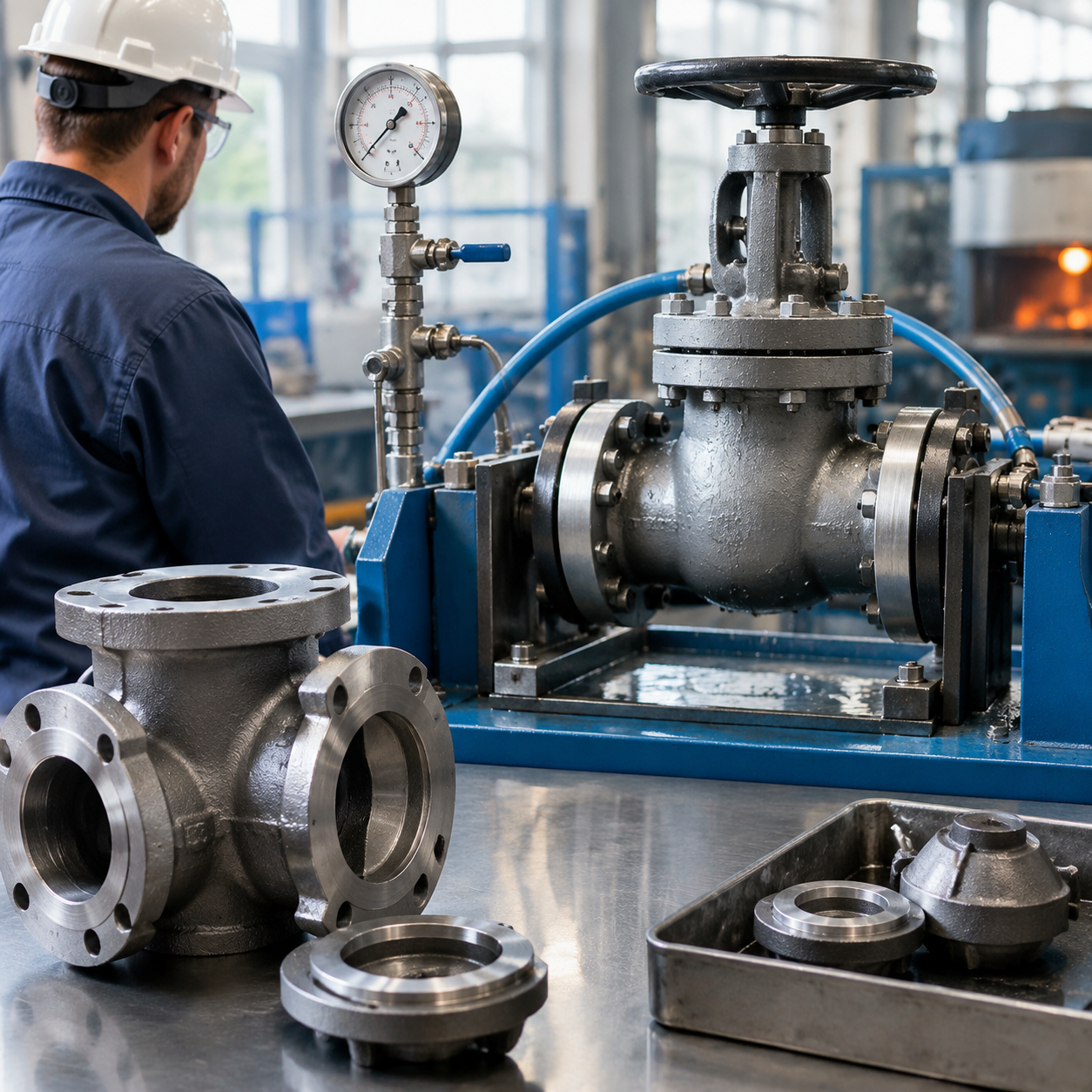
A practical walkthrough of API 598 shell and seat testing for buyers: test pressure ratios, hold durations, acceptance criteria, and how to arrange third-party witness.
What API 598 Actually Requires
API 598 is the standard test protocol that sits behind most general-service gate, globe, check, ball, and butterfly valves shipped to oil and gas, water, and process buyers. It defines two separate tests: a shell (body) test that proves the pressure-containing boundary has no through-wall defects, and a seat (closure) test that proves the disc or ball seals against its seat in both directions where the design is bidirectional. The shell test is always hydrostatic; the seat test is hydrostatic for most valves, with pneumatic testing permitted at lower pressures when the buyer specifies it or when the valve will handle gas service.
The key point for buyers is that API 598 is a test standard, not a design standard. It tells the inspector how hard to push and how long to hold, but the pressure ratings come from ASME B16.34 or the valve's product standard. When you write a purchase order, cite both: the design standard for the rating and API 598 for the test method. Vague wording like "tested per API" without a revision year is a common source of disputes at pre-shipment inspection.
Shell Test: Pressure Ratios and Hold Times
The shell test pressure is 1.5 times the 100°F pressure rating of the valve, rounded to the nearest convenient increment, and never less than the rating itself. For a Class 150 carbon steel valve rated at roughly 19.6 bar at 100°F, that puts shell test pressure near 29.4 bar (about 425 psi). For Class 300, expect roughly 51 bar; for Class 600, around 102 bar. The minimum shell test duration per API 598 scales with nominal size: 15 seconds for DN 50 and smaller, 60 seconds for DN 65 to DN 150, and 120 seconds for DN 200 and above. Many buyers simply specify a flat 120 seconds across the board, which is acceptable and easier to audit.
Acceptance is strict: no visible leakage through the body wall, bonnet joint, stem packing, or any threaded or welded connection. Weeping at the packing gland during a shell test is a fail, not a "we'll tighten it later" item. The test fluid is typically water with a corrosion inhibitor, chlorides controlled to avoid pitting on stainless bodies, and the valve should be dried and internally inspected afterward. If a foundry casts the body and a machine shop finishes it, insist that the shell test report trace to the heat number on the casting, not just the finished valve serial.
Seat Test: Bidirectional Checks and Leakage Allowance
Seat test pressure is 1.1 times the 100°F rating, so a Class 150 valve is tested near 21.6 bar and a Class 300 near 37.4 bar. Duration follows the same size-based table as the shell test. For bidirectional valves — most ball, butterfly, and some gate designs — the test is run from each side with the other side open to atmosphere, so any leakage past the seat is visible. For unidirectional valves such as swing check valves, a single-direction test against the rated flow direction is sufficient.
Acceptance for soft-seated valves is zero visible leakage for the duration. Metal-seated valves carry a small allowable leakage rate expressed in bubbles per minute or drops per minute, scaled by nominal size and pressure class; a DN 100 Class 300 metal-seated gate valve might be allowed on the order of a few drops per minute, while larger sizes allow more. Do not accept a verbal "within standard" — ask for the specific allowable in the inspection report and compare it to the API 598 table for that size and class. Also confirm whether the test was hydrostatic or pneumatic: a pneumatic seat test at 1.1× rating stores far more energy than water and requires a proper test cell with barricades, which tells you something about the supplier's shop safety discipline.
Witness Options and What to Put in the PO
Third-party witness is the buyer's main lever on test integrity. The most common arrangement is a pre-shipment inspection by a body like SGS, Bureau Veritas, TÜV, or a buyer-nominated inspector, who witnesses shell and seat tests, reviews material certificates, and signs the test report. Cost typically runs a few hundred dollars per inspection day plus travel; for a mixed container of valves, one or two days usually covers the lot. Alternatively, you can accept a manufacturer's own test report with photos and video of gauges, which is cheaper but weaker — video should show the gauge, the valve tag, and the full hold duration in one continuous clip.
Whatever route you choose, lock the details into the purchase order: API 598 revision year, test medium, shell and seat pressures by class, hold durations, acceptance criteria including the metal-seat allowable, witness name, and report language. A short checklist prevents most arguments at the factory gate.
Shell test at 1.5× rating, hold per size table or flat 120 s
Seat test at 1.1× rating, both directions for bidirectional valves
Test medium stated (water with chloride control, or pneumatic with justification)
Acceptance: zero visible leakage on soft seats; metal-seat allowable cited from API 598
Witness named in PO with dates and access to test bay
Test report traceable to heat number and valve serial, signed by tester and witness
Photos or continuous video of gauge and valve tag retained for the file
- Shell test at 1.5× rating, hold per size table or flat 120 s
- Seat test at 1.1× rating, both directions for bidirectional valves
- Test medium stated (water with chloride control, or pneumatic with justification)
- Acceptance: zero visible leakage on soft seats; metal-seat allowable cited from API 598
- Witness named in PO with dates and access to test bay
- Test report traceable to heat number and valve serial, signed by tester and witness
- Photos or continuous video of gauge and valve tag retained for the file
Where Failures Usually Show Up
In practice, shell test failures cluster at the bonnet-to-body joint and around cast-in flaws near the flange transition, especially on larger cast bodies where shrinkage porosity is harder to control. Seat failures concentrate on soft goods — a nicked O-ring, a scratched ball, or lapping compound left on a metal seat. If a supplier reports a first-pass rate that sounds too good, ask for the retest log; a healthy shop records failures and rework, and a log with zero retests over a large lot is more suspicious than reassuring.
Buyers sourcing from Chinese foundries and machine shops should also confirm that hydrostatic test water is treated and drained properly, and that stainless valves are passivated or at least thoroughly dried after testing to avoid chloride staining in transit. A valve that passed the shell test but arrives with rust bloom in the bore is a warranty conversation waiting to happen.
Frequently Asked Questions
Does API 598 require a pneumatic test?
No. API 598 allows hydrostatic testing as the default for shell and seat tests. Pneumatic testing is permitted for seat tests, typically at lower pressure, when the buyer specifies it or when the valve is intended for gas service and the buyer wants an air-leak check. If pneumatic testing is required, confirm the shop has a proper barricaded test cell.
Can I accept a manufacturer's test certificate without a third-party witness?
Yes, many buyers do for standard-service valves. To reduce risk, require the test report to include shell and seat pressures, hold durations, medium, the specific acceptance criterion applied, and continuous video showing the gauge and valve tag. For critical service or large orders, a one- or two-day third-party witness is usually worth the cost.
What is the difference between shell test and seat test pressure?
Shell test pressure is 1.5 times the 100°F rating and proves the body and joints have no through-wall leaks. Seat test pressure is 1.1 times the rating and proves the closure seals, tested from each side for bidirectional valves. Both use size-based hold durations from API 598, commonly simplified to a flat 120 seconds.
Looking for a reliable casting supplier? Request a quote from Intercontinental Casting — our engineering team replies within one business day.