
Tooling Amortization: How to Compare Casting Quotes the Right Way
Publication Date : 2026-10-30 03:11:08
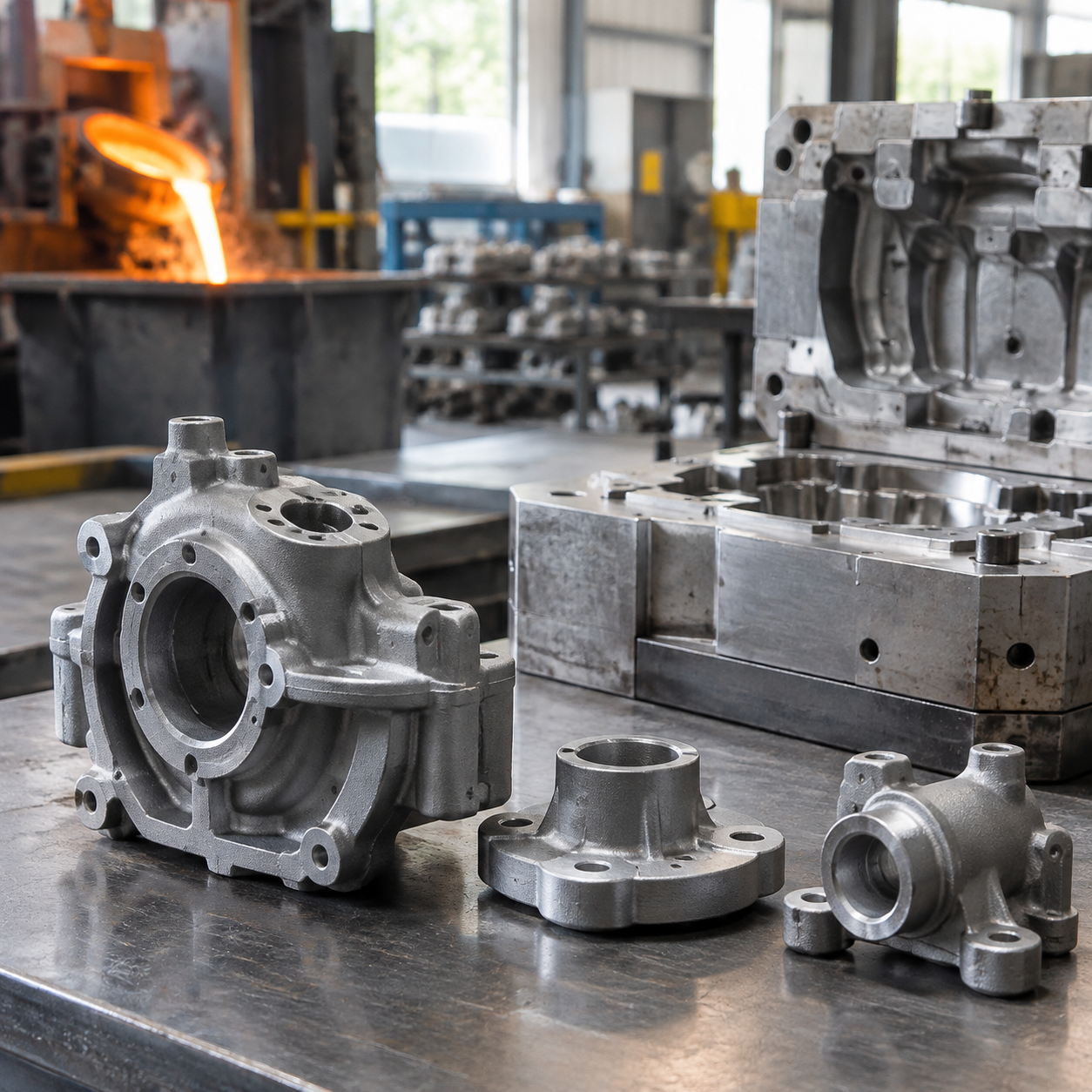
Two casting quotes can look 30% apart on piece price and still be nearly identical over the life of the program — or the cheaper one can cost you more. The difference is usually how tooling is amortized. This guide shows how to separate tooling from piece price, calculate your real break-even volume, and compare suppliers on total landed cost instead of headline unit rates.
Why Piece Price Alone Misleads You
A casting quote bundles two very different things: the recurring cost of making each part (metal, melting, molding, machining, finishing) and the one-time cost of the tool — the pattern, die, or mold. Suppliers can present that one-time cost in three ways: as a separate line item you pay upfront, as a per-piece surcharge spread across your order, or hidden inside the unit price. All three can describe the same tool; only the presentation changes.
This is where comparison goes wrong. A quote at $4.20 per piece with tooling billed separately and a quote at $5.10 per piece with tooling 'included' may differ by a few hundred dollars over 10,000 units — or by tens of thousands at 2,000 units. Before you rank suppliers, convert every quote to the same format: recurring piece price plus the full one-time tooling charge, stated separately. If a supplier will not break it out, ask for the tooling cost in writing. A supplier who owns the tool and refuses to show its price is a red flag for the whole relationship.
The Break-Even Math, With Numbers
Suppose your part is a 2.5 kg aluminum die casting, and you are choosing between two quotes. Supplier A quotes $6.80 per piece plus $18,000 for the die, paid upfront. Supplier B quotes $8.40 per piece with tooling included. The apparent gap is $1.60 per piece in B's favor — until you do the division. The tooling difference ($18,000) divided by the piece price gap ($1.60) gives a break-even of 11,250 units. Below that volume, Supplier A is cheaper; above it, Supplier B wins. At 5,000 units, A's total is $52,000 versus B's $42,000 — B is better by $10,000. At 25,000 units, A totals $188,000 versus B's $210,000 — A is better by $22,000.
Run the same check on every quote pair before you negotiate. The formula is simple: (tooling cost of quote 1 − tooling cost of quote 2) ÷ (piece price of quote 2 − piece price of quote 1) = break-even volume. Do it in a spreadsheet with your forecast volumes at launch, year two, and year three. Most sourcing mistakes on castings come from comparing quotes at a single volume when the program will run at three different ones.
What the Tooling Quote Should Spell Out
Once you have the tooling number separated, audit what it covers. For die casting, a single-cavity die for a mid-size part commonly runs $15,000–$60,000 depending on size, cavity count, and steel grade; gravity and sand patterns are far cheaper, often $1,000–$8,000, but wear faster. A tooling quote should state cavity count, estimated die life in shots, who owns the tool, and whether maintenance and refurbishment are included or billed separately. A die quoted at 100,000-shot life with no maintenance clause can fail at 60,000 shots and leave you paying for a rebuild mid-program.
Also confirm how the tool is paid: upfront before first article, 50/50 with production, or amortized per piece. If it is amortized, ask what happens if you order less than forecast — does the surcharge continue until the tool is paid off, or is it capped? Get the answer in the purchase order, not in email. And ask who physically holds the tool: if you switch suppliers later, a tool you paid for but do not own can become a hostage. Ownership should transfer to you on final payment, with a written right to retrieve it.
- Tooling cost stated as a separate line item, with cavity count and steel/pattern grade
- Estimated tool life in shots, plus wear parts and maintenance terms
- Ownership: transfers to buyer on final payment; removal rights in writing
- Payment schedule: upfront, milestone-based, or amortized per piece with a cap
- Amortization terms if volume falls short of forecast
- Cost of engineering changes after tool approval, and who pays
A Practical Checklist for Comparing Casting Quotes
Build a comparison sheet with one column per supplier and these rows: recurring piece price, tooling cost, tool life, minimum order quantity, and total cost at each of your forecast volumes. Add freight, duty, and inspection costs, because a domestic supplier and an overseas one rarely land at the same total even with identical ex-works prices. Then mark which quotes are apples-to-apples: same alloy, same tolerance class, same surface finish, same machining scope. A quote that looks 20% cheaper often excludes machining or uses a looser tolerance band, and those differences dwarf the tooling question.
Finally, sanity-check the tooling number against the piece price. If a supplier quotes a suspiciously low tooling cost, the difference is usually recovered in piece price or in a shorter die life. If the tooling is unusually high, ask what drives it — cavity count, steel grade, or a complex slide. A supplier who can explain the number is a supplier who can explain the part. Run the break-even math on the two or three finalists, pick the one that wins at your realistic volume, and put the tooling terms in the contract before you release the PO.
Frequently Asked Questions
Should I pay for casting tooling upfront or let the supplier amortize it into the piece price?
It depends on volume. Upfront payment usually gives you a lower total cost if you will order well above the break-even volume, and it gives you clear ownership of the tool. Amortization protects you if volumes are uncertain, but confirm the surcharge stops once the tool is paid off and that ownership still transfers to you. Get either arrangement in writing.
How do I calculate the break-even volume between two casting quotes?
Subtract the two tooling costs, then divide by the difference in piece price. For example, $18,000 tooling difference divided by a $1.60 piece price gap equals 11,250 units. Below that volume the quote with the lower tooling cost wins; above it, the quote with the lower piece price wins. Run it at each of your forecast volumes, not just one.
Who owns the casting tool after I pay for it?
It should be you. Make ownership transfer on final payment explicit in the purchase order, and include the right to retrieve the tool if you change suppliers. Many buyers assume they own the die because they paid for it, then discover the supplier holds it. A short ownership and removal clause prevents that.
Looking for a reliable casting supplier? Request a quote from Intercontinental Casting — our engineering team replies within one business day.