
Ocean Freight for Castings: Container Math for Buyers
Publication Date : 2026-11-02 03:10:33
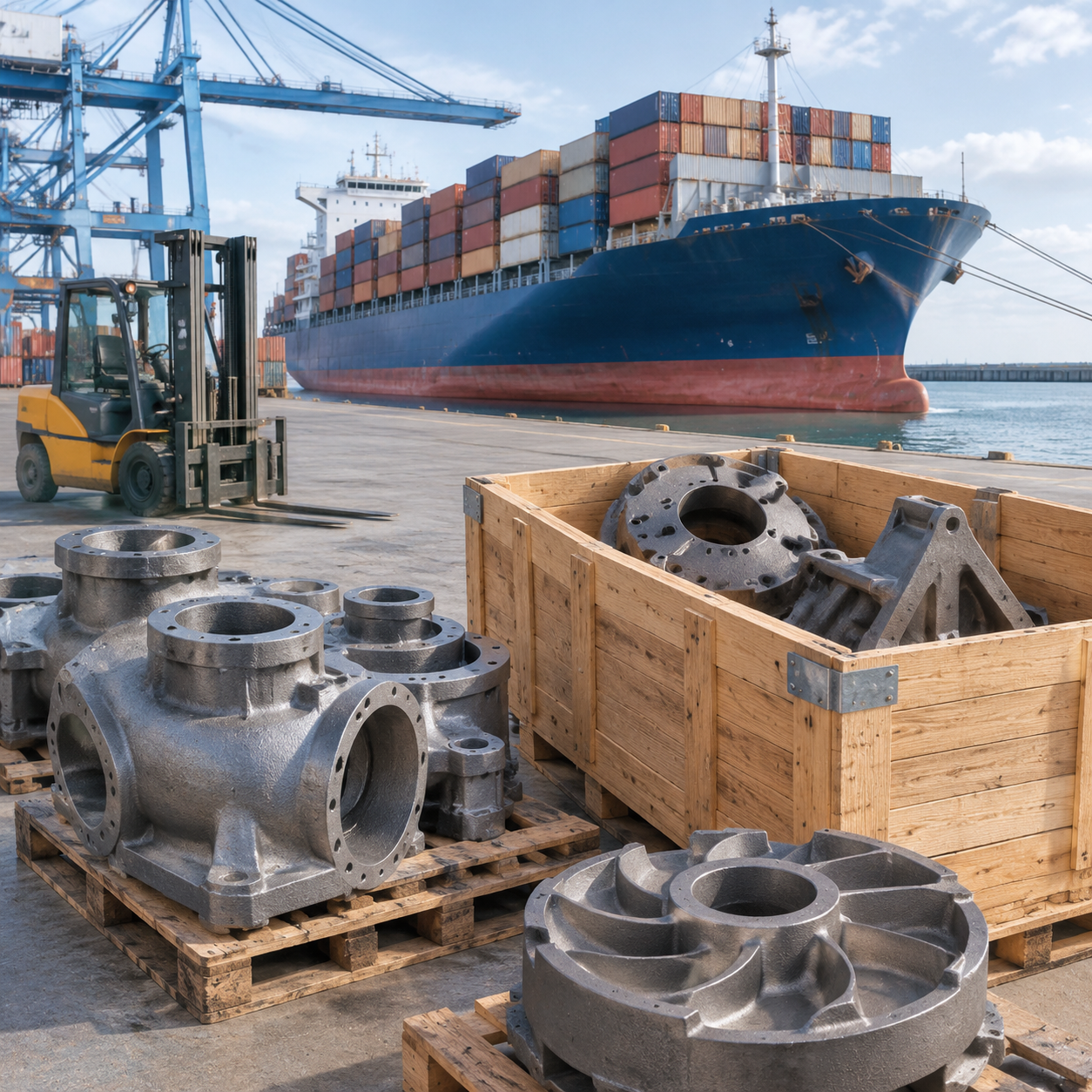
Castings are dense, so ocean freight quotes hinge on weight and volume utilization, crate design, and where the Incoterm hands over cost. This guide gives buyers concrete numbers to plan container loads, crate dimensions, and landed cost before booking.
Why Castings Rarely Fill a Container by Volume
Most iron, steel, and ductile iron castings run roughly 7.2–7.8 g/cm³ solid, so a machined bracket or pump housing lands around 2,000–4,000 kg per cubic meter once you account for pockets, cores, and machining. A 20ft container holds about 33 m³ and a 40ft about 67 m³, but weight limits bind long before volume: a 20ft is typically capped near 28,000 kg gross cargo and a 40ft near 26,500–28,000 kg depending on the line and road leg. Load a dense casting line without planning and you hit the payload ceiling at 40–60% volume fill.
The practical consequence: for heavy castings you are buying kilograms, not cubic meters. Ask your forwarder for both a weight-based and a measurement-based rate and compare. If the weight rate wins by more than 10–15%, the load is weight-limited and crate design should focus on stacking strength and safe payload, not on shaving centimeters. If measurement wins, you have air in the box and should revisit pallet footprints and nesting before negotiating freight.
Container Math: Weight and Volume by Equipment
Use these working figures for planning, then confirm exact limits with your carrier, since road weight rules at the destination port often decide the real ceiling. A 40ft high-cube gives you roughly 76 m³ but no more payload than a standard 40ft, so it only helps light, bulky castings such as thin-wall covers or large housings packed with dunnage. For a mixed order, split the heavy SKUs into 20ft loads and the bulky SKUs into a 40ft HC rather than forcing everything into one box.
A quick rule for castings: estimate net casting weight, add 3–6% for pallets and crating on small parts and 8–12% on heavy machined items with timber cradles, then add 2–4% for dunnage and moisture barriers. If the total exceeds 24,000 kg for a 40ft or 25,000 kg for a 20ft, plan a second container or negotiate a heavier-rated service before you confirm the order, not after production is packed.
Crate Design That Survives the Ocean
Castings fail in transit through point loading and shifting, not through fragility. Build crates so the heaviest piece sits directly over the skid bearers, keep the center of gravity below one-third of crate height, and block or brace every item so it cannot move more than 10–20 mm. For pieces over 500 kg, use timber cradles shaped to the casting, bolt through existing mounting holes where possible, and line contact points with rubber or EVA sheet. Leave 50–80 mm clearance to crate walls for forklift entry and ventilation, and fit VCI film or desiccant for machined surfaces on voyages over 25 days.
Crate dimensions should follow the container grid: two 1,100 x 1,100 mm pallets fit side by side in a 20ft (internal width about 2,350 mm), and stacking two tiers of 1,000 mm crates stays under the 2,390 mm door height of a standard container. Label gross weight, center of gravity, and slinging points on two faces. Ask the supplier for packing photos before the container doors close; a five-minute photo check prevents most unloading disputes.
- Confirm gross weight per crate and per container against the booking
- Specify skid bearer spacing so forklift tines clear the base
- Require ISPM 15 heat-treated or fumigated timber and visible stamps
- Ask for VCI or desiccant on machined surfaces for long voyages
- Photograph blocking and bracing before sealing the container
How Incoterms Change Your Landed Cost
FOB puts the container on board at the Chinese port and leaves ocean freight, insurance, and destination charges to you. CIF adds freight and minimum insurance but still leaves terminal handling, customs, and inland delivery on your side, and the insurance cover is usually Institute Cargo Clauses (C), which excludes many handling damages. DAP or DDP moves more cost to the seller, but the price hides the freight margin, and DDP can create import-of-record problems in some markets. For castings, where a single crate can weigh two tonnes, the destination-side handling and lift charges matter as much as the ocean rate.
Build a landed cost sheet with these lines: casting price, export packing, inland haulage to port, origin charges, ocean freight, insurance, destination THC, customs clearance, inland delivery, and duty. Compare FOB and CIF quotes on the same sheet and you will often find the CIF premium is 8–15% above the underlying freight, which may still be worth it for a first shipment but rarely for regular volume. Whichever term you choose, write the container loading plan and crate weights into the contract so responsibility for overweight or damaged stowage is unambiguous.
Frequently Asked Questions
Should I ship castings FOB or CIF?
For repeat orders, FOB with your own forwarder usually gives better control and lower total cost, because you see the real freight rate and can choose insurance cover. CIF is simpler for a first trial shipment, but check the insurance clause and confirm destination THC is not buried in the seller's price.
How much does crating add to the shipping weight?
Plan on 3–6% of net casting weight for small parts on pallets and 8–12% for heavy machined castings in timber cradles, plus 2–4% for dunnage and moisture barriers. Weigh the first packed crate and use that ratio for the rest of the order.
Can I mix heavy and light castings in one container?
Yes, but load heavy crates over the axles and floor-level, and keep light bulky items on top or toward the doors. Verify the total gross weight stays under the road limit at the destination, which is often lower than the ocean container rating.
Looking for a reliable casting supplier? Request a quote from Intercontinental Casting — our engineering team replies within one business day.