
NDA and Drawing Protection for Custom Casting Projects
Publication Date : 2026-11-10 03:10:34
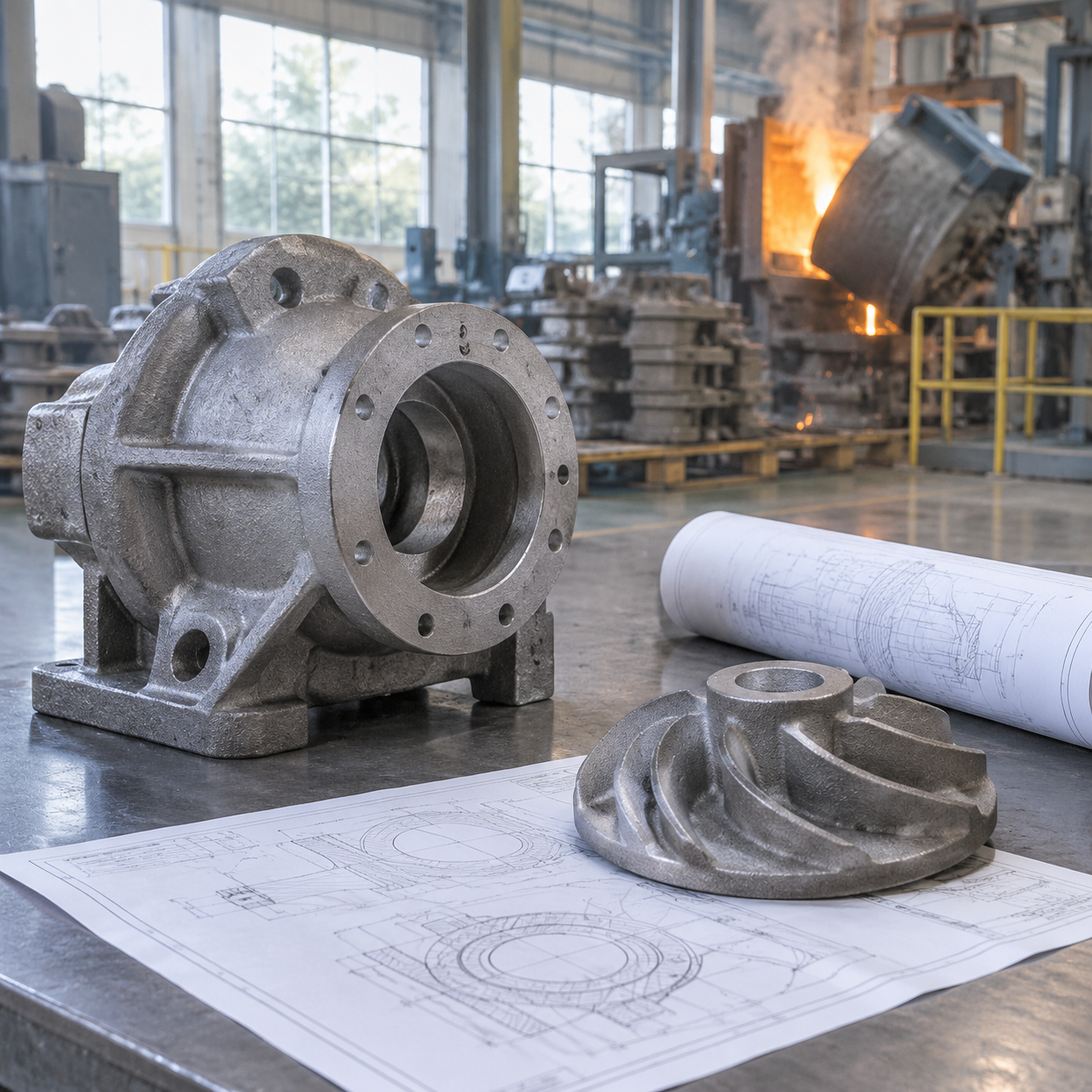
An NDA is a useful first layer, not a vault. This guide explains what a casting NDA can and cannot enforce, how drawing watermarking and version control work in practice, and how split sourcing limits exposure when you send CAD files to Chinese foundries.
What an NDA Can and Cannot Protect in Casting
A signed NDA gives you a contractual claim if a foundry discloses your drawings or tooling to a third party. It does not stop a file from being copied, and it does not travel automatically to every subcontractor in the chain. In practice, a Chinese-language NDA with a defined confidentiality period of 3-5 years, a clear definition of confidential information (2D drawings, 3D models, material specs, tooling, samples, test data), and a named legal entity rather than a trading company is the minimum. Ask for the company chop and business license so the signing party matches the entity that will actually receive files.
What an NDA cannot do is prevent reverse engineering from a delivered part, block a machinist from remembering a geometry, or enforce itself. Enforcement means arbitration or litigation, typically in the supplier's jurisdiction, and costs commonly run well above the value of a small casting order. Treat the NDA as evidence and deterrence, and pair it with technical controls: need-to-know file distribution, watermarks, and splitting the job so no single supplier sees the complete design. Before any file transfer, confirm the foundry's tooling ownership clause states that molds, patterns, and fixtures are your property and must be returned or destroyed on request.
- NDA signed by the legal entity that will receive files, not a trading agent
- Confidentiality period stated (3-5 years is common)
- Confidential information defined to include 3D models, 2D drawings, tooling, samples, and test data
- Tooling ownership clause: molds and patterns are buyer property, returnable on request
- Named signatory with company chop and matching business license
- Governing law and dispute venue agreed in writing
Watermarking and Version Control for Drawings
Watermarking is the cheapest control that actually changes behavior. Add a visible diagonal overlay to every PDF and drawing sheet with the recipient company name, the issue date, and a unique document ID. If a file surfaces elsewhere, the watermark tells you which recipient leaked it. Pair this with a simple issue log: every revision gets a number, a date, and a named recipient, and the foundry must confirm in writing which revision it is quoting and producing. Most disputes we see are not theft but version confusion, where a foundry quotes Rev B while the buyer expects Rev C.
For 3D models, strip embedded metadata and history where possible, and send STEP files rather than native CAD. For 2D drawings, flatten layers, remove design-history notes, and redact internal part numbers if they reveal the assembly. Keep a distribution register: who received which file, on what date, under which NDA. A practical rule is to send only the views and dimensions the foundry needs to quote and tool, not the full assembly. The chart below shows a typical distribution pattern across a casting project's file types and how much each is exposed to third parties.
Split Sourcing: Limiting What Any One Supplier Sees
Split sourcing means no single foundry sees the whole picture. For a machined casting, one supplier may receive the raw casting geometry and another the finish-machining drawing, with you controlling the interface dimensions. For multi-part assemblies, allocate parts across two or three foundries so no one holds the complete bill of materials. This is not about distrust by default; it is about reducing the damage if a file is mishandled, and it also gives you a second quote benchmark. The trade-off is coordination cost: you need a controlled interface drawing and a clear owner for tolerance stack-up, or parts will not fit.
A workable split for many projects is: Foundry A gets the casting drawing and pattern, Foundry B gets the machining drawing and fixture, and you keep the assembly drawing and the material and heat-treat specifications in-house, releasing only what each supplier needs. Where a single supplier must see everything, negotiate a higher confidentiality tier: named personnel access, no photography on the shop floor, and a written commitment that subcontractors are bound by the same terms. The chart below shows how a three-supplier split distributes exposure compared with a single-source approach.
A Practical Checklist Before You Send Files
Before the first file leaves your desk, run a short checklist. Confirm the NDA is signed by the receiving entity, the drawing carries a visible watermark with recipient name and date, the revision number is logged, and the file set contains only what is needed for the quote. Ask the foundry in writing who inside the company will see the files and whether any subcontractor is involved. If a subcontractor is used, the NDA must name them or require flow-down terms.
After the order, keep the controls alive. Require written confirmation of the production revision, inspect the first article against that revision, and keep your tooling ownership letter on file. When the project ends, request written confirmation that files and patterns are returned or destroyed. None of this is expensive; it is mostly discipline, and it is far cheaper than discovering your drawing on a competitor's bench.
Frequently Asked Questions
Is a Chinese-language NDA enforceable against a Chinese foundry?
A properly executed contract with the correct legal entity and company chop is generally enforceable in China, but enforcement cost usually exceeds the value of a small casting order. Use the NDA as deterrence and evidence, and back it with watermarks, need-to-know distribution, and split sourcing.
Should I send STEP files or native CAD to a foundry?
Send STEP files for 3D geometry and flattened PDFs for 2D drawings. Native CAD can carry design history and metadata you may not want to share. Keep assembly models and internal part numbers in-house unless the foundry genuinely needs them to quote or tool.
Does split sourcing really reduce risk, or just add cost?
It reduces the blast radius if a file leaks, because no single supplier holds the complete design, and it gives you a second quote benchmark. The cost is coordination: you must own the interface drawing and tolerance stack-up, or parts may not fit.
Looking for a reliable casting supplier? Request a quote from Intercontinental Casting — our engineering team replies within one business day.