
Corrosion-Resistant Irons: Choosing for Harsh Service
Publication Date : 2026-11-18 03:10:36
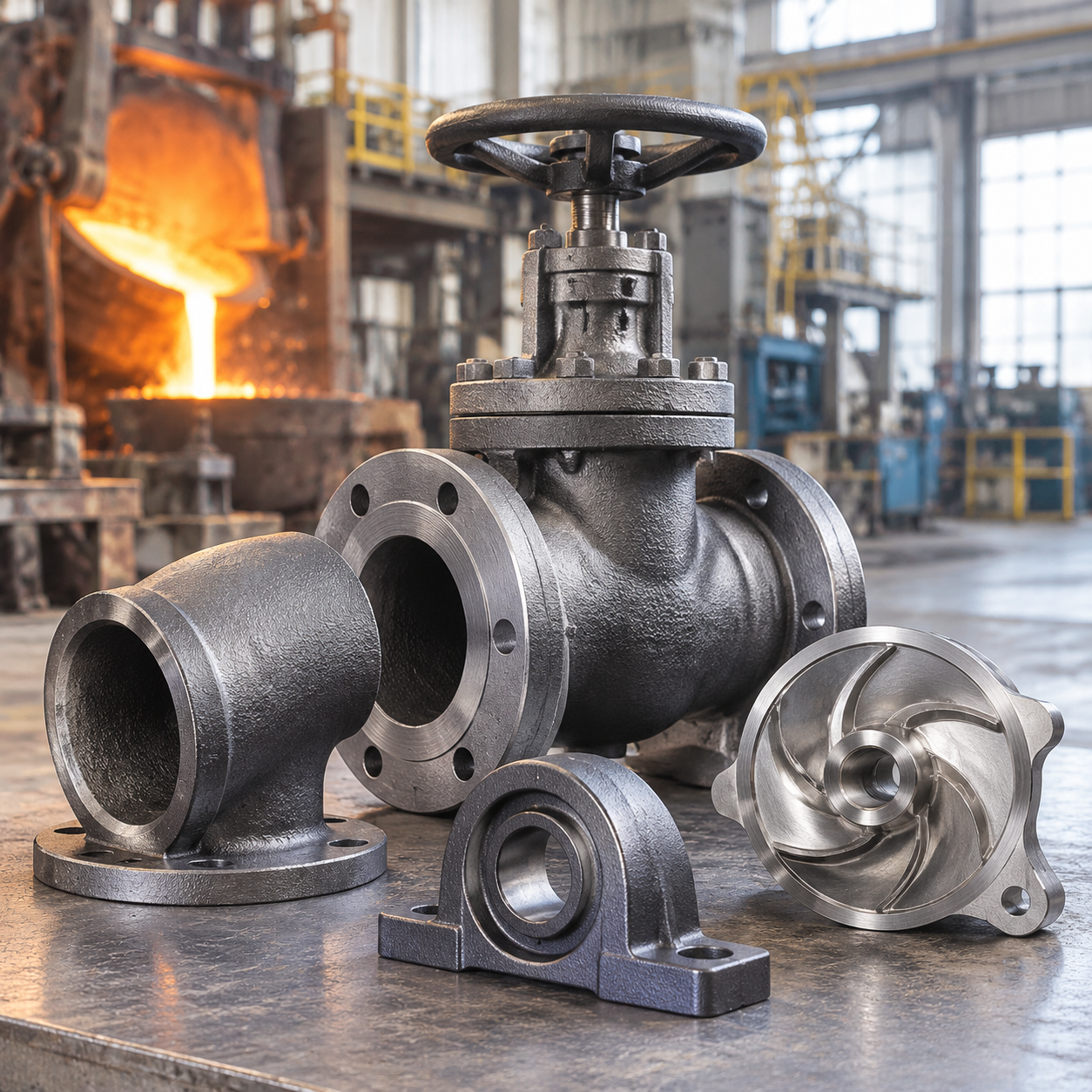
A practical comparison of alloyed cast irons, coated irons, and stainless steel for corrosive service, with lifecycle cost ranges, selection checklists, and the questions buyers should ask before specifying.
Start With the Environment, Not the Alloy
Most premature corrosion failures in cast iron parts trace back to an incomplete service description, not a bad material choice. Before comparing alloyed iron against coatings or stainless, write down the actual exposure: the specific chemistry and concentration (seawater, brackish cooling water, dilute acid, caustic, fertilizer salts), the temperature range, whether the part is continuously wet, splashed, or alternately wet and dry, and whether chlorides are present. Chlorides are the single most important variable — a 200 ppm chloride stream and a 20,000 ppm seawater splash behave like different worlds for the same iron.
Then define the acceptable failure mode. A pump volute that slowly graphitizes over eight years is a different problem from a valve body that pits through in eighteen months. Note the wall thickness you can afford to lose, whether the surface is visible (cosmetic rust matters) or internal, and whether the part is machined after coating, which can breach a barrier. This description drives everything that follows, and it is also the document your foundry needs to quote realistically.
Alloyed Irons: The Middle Path
High-silicon irons (typically 14–16% Si, often with molybdenum) form a passive silica-rich surface layer and are widely used for dilute sulfuric and nitric acid service, but they are brittle and sensitive to thermal shock and to hydrofluoric acid or strong alkalis. Ni-resist austenitic irons (roughly 18–22% Ni with 2–3% Cr, or the higher-nickel grades) handle seawater, brackish water, and many neutral chloride brines well and remain machinable, at a material cost several times that of gray iron. High-chromium white irons (around 25–30% Cr) give good resistance to oxidizing slurries and abrasion-corrosion combinations, though they are hard to machine and better cast to near-net shape.
For mildly corrosive, mostly atmospheric or fresh-water duty, a low-alloy gray iron with 0.5–1.5% copper and 0.3–0.8% chromium often buys a useful improvement in rust resistance for a modest premium over plain gray iron — commonly in the range of 10–25% more on the casting price. The trade-off is always in the foundry: high-silicon and high-nickel irons need tighter melting control, careful gating, and stress relief, so expect longer lead times and fewer qualified suppliers.
Coatings: Cheap Barrier, Real Limits
Fusion-bonded epoxy, zinc-rich primers, and thermal-spray zinc or aluminum are the workhorses for cast iron in atmospheric, buried, and immersion service. A 250–400 µm fusion-bonded epoxy on a properly blast-cleaned (Sa 2.5) surface can deliver many years in fresh water and neutral soils; thermal-spray aluminum with a sealer is common for marine atmospheres. The catch is mechanical: coatings fail at edges, threaded holes, and machined faces, and they are vulnerable to abrasion and to impact during handling and installation. Anything you machine after coating must be recoated or plugged before coating.
Coatings also shift risk to the applicator. Surface preparation quality, cure schedule, and holiday testing determine life far more than the resin brand. Specify dry-film thickness ranges, holiday testing (for immersion), and a salt-spray or immersion test protocol on production coupons if the service is genuinely aggressive. For internal surfaces of pumps and valves, a 300 µm epoxy is often the lowest first-cost route to five to ten years of service — but only if the coating survives installation and the fluid does not attack the resin.
Stainless and Lifecycle Cost
Stainless (typically CF8M / 316 or duplex grades for castings) is the default answer when chlorides and visible surfaces combine, but it is not automatically cheaper over life. The material itself costs roughly three to five times a coated gray iron casting, and machining stainless castings is slower. Its advantage is that the corrosion barrier is the metal itself: no coating to chip, no recoating interval, and predictable behavior in many chloride-bearing streams, provided the alloy is matched to the chloride level and temperature (316 has practical limits well below seawater at elevated temperature; duplex or higher-molybdenum grades are often needed).
The lifecycle comparison hinges on replacement and downtime, not just purchase price. A coated iron part at 100 cost units that is replaced or recoated every five years over a twenty-year horizon costs roughly 200–250 units including labor and downtime; an alloyed iron at 220–380 units may run the full horizon untouched; stainless at 450 units does the same with fewer inspection requirements. If downtime is expensive — continuous process, remote site, safety-critical — the higher first cost usually wins. If the duty is mild and access is easy, coatings remain rational.
A Practical Selection Checklist
Use this checklist to narrow the choice before requesting quotes; it also gives your foundry the information it needs to propose an alloy rather than guess.
- Chloride level (ppm) and whether the surface is continuously wet, splashed, or alternately wet and dry
- pH range and specific acids or alkalis, with concentration and temperature
- Abrasive solids present (sand, slurry, catalyst fines) and flow velocity
- Maximum wall-thickness loss you can tolerate over the design life
- Whether internal or machined surfaces must remain uncoated
- Installation damage risk (handling, bolting, welding) and whether field repair is possible
- Inspection and recoating access: can the part be reached without major disassembly?
- Target service life and the cost of one day of unplanned downtime
Frequently Asked Questions
Can I use coated gray iron in seawater?
Only with caution. Epoxy or thermal-spray coatings can give several years in splash zones, but coatings are breached at edges, threads, and machined faces, and seawater chlorides attack bare iron quickly once the barrier fails. For continuous seawater immersion, Ni-resist or a suitable stainless grade is the safer specification.
Is Ni-resist worth the price over coated iron?
If the part is difficult to access, downtime is costly, or the coating would be damaged during installation, yes. Ni-resist typically costs three to four times plain gray iron but removes the recoating interval and the coating-failure risk. For accessible, mild duty with a five-year horizon, coatings are usually cheaper over life.
What should I send the foundry with my RFQ?
Send the fluid chemistry (chloride level, pH, acids or alkalis and concentration), temperature range, wet/dry pattern, abrasive content, required wall-thickness allowance, whether surfaces are machined after coating, and target service life. That information lets the foundry propose an alloy and coating system instead of quoting the drawing blindly.
Looking for a reliable casting supplier? Request a quote from Intercontinental Casting — our engineering team replies within one business day.